
Heel Pain & Plantar Fasciitis Treatment in Newcastle
That sharp pain in your heel when you get out of bed isn't going to fix itself. We diagnose what's causing it and get you back on your feet — usually without injections or surgery.
No GP referral needed · HICAPS on-site · Most private health funds · Same-week appointments
Does this sound like you?
Heel pain has a pattern. If two or more of these describe your experience, you're in the right place:
The first few steps out of bed feel like stepping on broken glass
Pain eases after walking around for a few minutes — then comes back later in the day
Standing at work or on hard floors makes it noticeably worse
It hurts more after exercise, not during
You've tried stretches, gel heel cups, or new shoes and it's still there weeks later
You've started limping or changing how you walk to avoid the pain
That morning pain is the classic signature of plantar fasciitis — but it's not the only thing that causes heel pain, which is why a proper diagnosis matters before you start any treatment.
What's actually causing your heel pain?
Heel pain isn't one condition — it's a symptom of several different problems, and the treatment is different for each. Here are the six causes we see most often at the clinic.
Plantar fasciitis (the most common cause)
The plantar fascia is a thick band of tissue that runs along the bottom of your foot from your heel to your toes. When it’s overloaded — by too much standing, sudden increases in exercise, weight gain, unsupportive shoes, or tight calves — it develops tiny tears at the point where it attaches to the heel bone. That’s the pain you feel first thing in the morning.
Plantar fasciitis is responsible for around 80% of heel pain cases. The good news: it responds very well to treatment when it’s done properly. The bad news: untreated, it can persist for years and become chronic.
Achilles tendinopathy
Pain at the back of the heel — not the bottom — usually points to the Achilles tendon. It’s common in runners, hikers, and people who’ve recently changed their footwear (especially from heeled shoes to flats). The tendon becomes thickened and painful where it inserts into the heel bone.
Heel Spurs
A heel spur is a small bony growth on the underside of the heel bone, usually showing up on an X-ray as a hook-like projection. Here’s what most people don’t realise: heel spurs themselves are usually painless. They’re a finding, not a diagnosis. The pain almost always comes from the surrounding plantar fascia, not the spur itself — which is why treatment focuses on the fascia.
Stress fractures
Tiny cracks in the heel bone (calcaneus) caused by repetitive impact — runners increasing mileage too quickly, military recruits, people who’ve recently taken up high-impact exercise. Stress fractures hurt with every step and don’t ease up with rest the way plantar fasciitis does. We’d typically refer for an MRI or bone scan to confirm.
Sever's disease (children & teens)
If your active 8–14 year old is complaining of heel pain — particularly after sport — this is almost always Sever’s disease. It’s a growth plate inflammation, common in growing kids who do a lot of running and jumping. It’s benign and self-limiting, but it’s painful and we can speed up recovery considerably with the right approach.
Bursitis & fat pad atrophy
Less common, but worth ruling out. Bursitis is inflammation of the small fluid-filled sac at the back of the heel. Fat pad atrophy is thinning of the natural cushion under the heel — more common in older adults — and feels like deep bruising every time the heel strikes the ground.
Our heel pain treatment approach
Generic heel pain advice — "ice it, rest it, stretch your calves" — works for a small percentage of mild cases. For everyone else, you need a treatment plan built around what's actually causing your specific pain. Here's how we approach it.
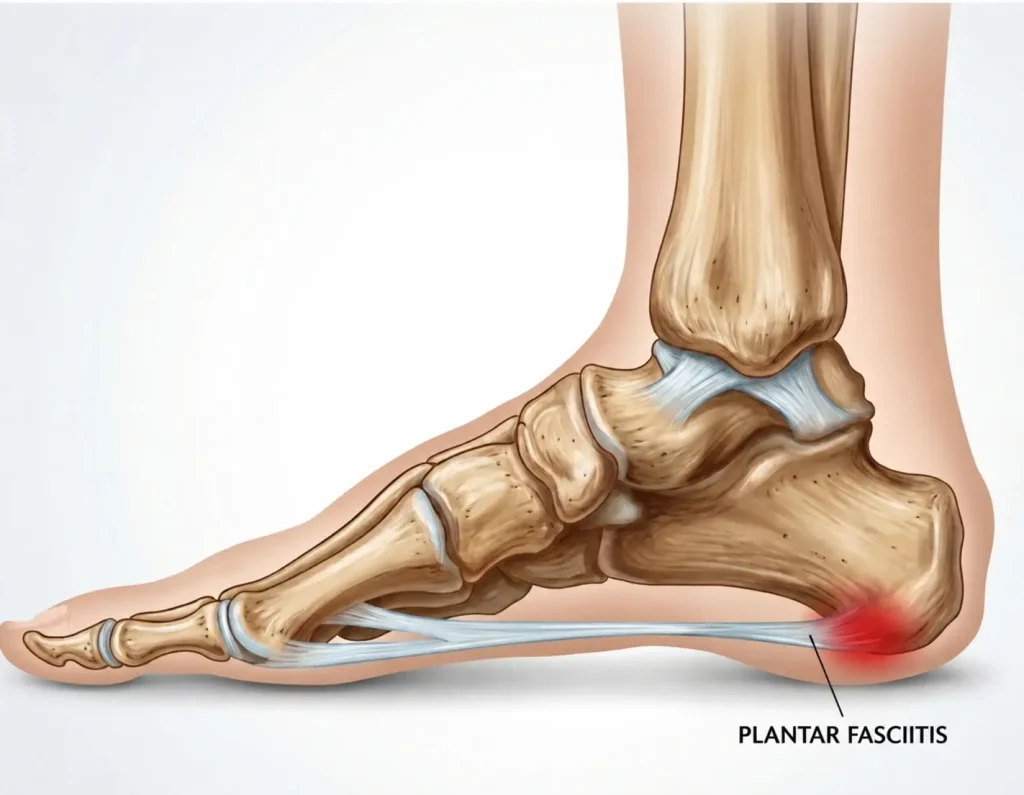
Step 1 — Diagnose the exact cause
We don't treat "heel pain" — we treat plantar fasciitis, or Achilles tendinopathy, or whichever specific condition is causing it. First appointment includes a thorough history, palpation of the painful structures, ankle and foot range of motion testing, and gait analysis. If we suspect a stress fracture or unusual pathology, we'll arrange imaging.
Step 2 — Settle the pain quickly
Before we worry about long-term fixes, we want you walking comfortably again. Depending on the diagnosis, this might involve strapping/taping, a heel raise, temporary off-the-shelf inserts, calf stretching protocol, ice routine, and footwear changes. Most people feel a noticeable improvement within 1–2 weeks of starting active treatment.
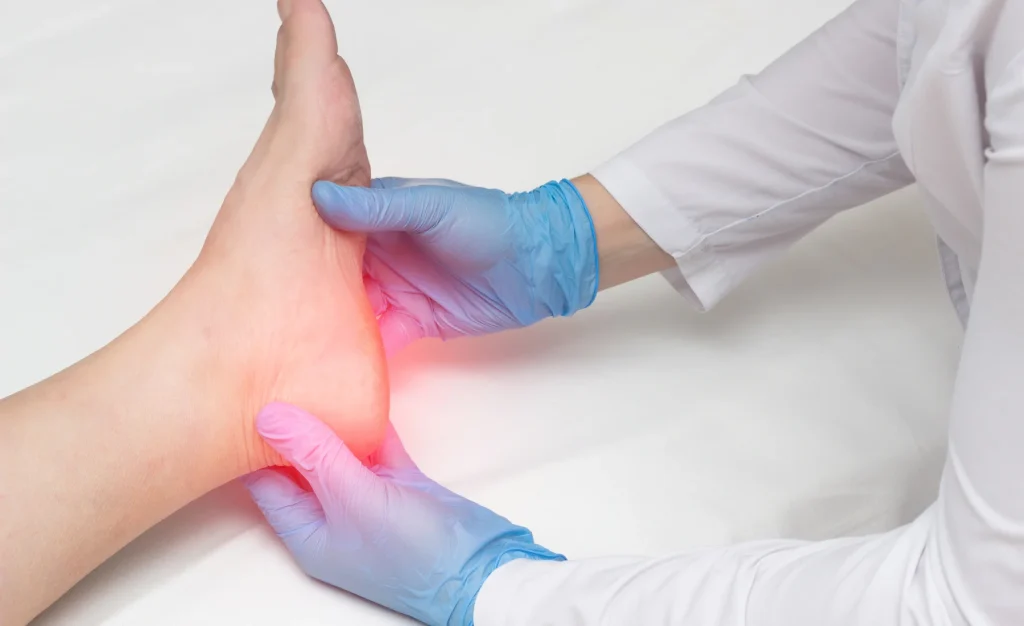
Step 3 — Fix the underlying mechanics
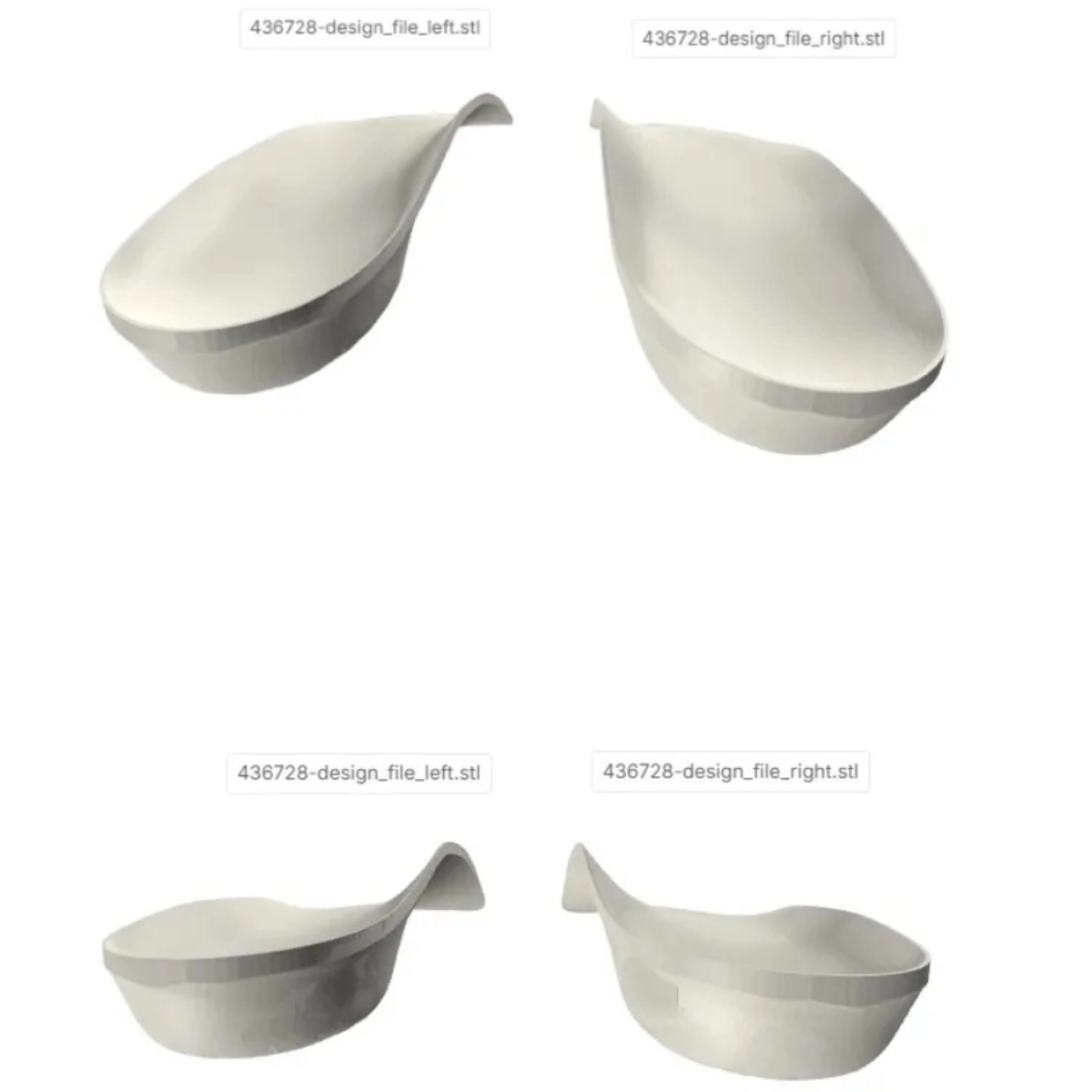
Heel pain almost always has a mechanical cause: how your foot loads when you walk, how flexible your calf is, what shoes you're wearing, how much you're standing. For plantar fasciitis specifically, custom orthotics are the most effective long-term treatment — they offload the heel and support the arch so the fascia can heal without being repeatedly re-injured every time you take a step.
We make 3D printed custom orthotics on-site — these target your specific foot mechanics rather than the generic shape of a chemist insole.
Step 4 — Prevent it coming back
Once the pain is gone, the work shifts to prevention. Calf and plantar fascia strengthening exercises, footwear advice, load management for runners and active people, and regular reviews to catch any early warning signs before they become full relapses.
Why most heel pain treatment fails (and what works)
Most people we see for heel pain have already tried several things that didn't work. Here's why they fail — and what the evidence actually supports:
What doesn't work long-term:
Rest alone
The pain settles, you start walking normally, the pain comes back
Chemist insoles & gel heel cups
Provide cushioning but don't address the cause
Calf stretches in isolation
Helpful, but not enough on their own
Cortisone injections
Offer short-term relief but don't fix mechanics, and repeated injections weaken the fascia
"Just push through it"
Turns a 3-month problem into a 3-year problem
What's actually evidence-based:
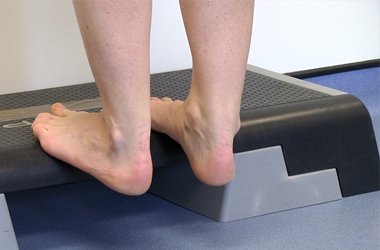
Custom orthotics + calf stretching + plantar fascia loading exercises
The combination matters
Activity and load modification
Not full rest
Appropriate footwear
Supportive, well-cushioned, with a small heel-to-toe drop
Weight management
Where it's a contributing factor
Shockwave therapy
For chronic cases that haven't responded after 6+ months
How long until I feel better?
Honest answer: it depends on how long you've had it and which condition we're dealing with. Rough guide:
Acute plantar fasciitis (<3 months):
Most patients are 70–80% better within 4–6 weeks of starting active treatment.
Chronic plantar fasciosis (6+ months):
Slower — typically 3–6 months for full resolution.
Achilles tendinopathy:
Highly variable. Expect 2–4 months with a properly progressed loading program.
Sever's disease (kids):
Pain usually settles within 2–4 weeks of activity modification, though it can flare during growth spurts until skeletal maturity.
Stress fractures:
6–8 weeks of off-loading minimum, sometimes a CAM boot, with a graduated return to activity.
Across all conditions, the people who recover fastest are the ones who start treatment early and stick to the plan. The ones who take longest are the ones who’ve been treating themselves with Dr Google for 18 months before coming in.
FAQ's
No. You can book directly with us. If your GP has put you on a GP Chronic Condition Management Plan (formerly EPC/CDM), that may contribute to the cost of your consultations, but it's not required to see us.
During sleep, your plantar fascia shortens and tightens. The first few steps in the morning suddenly stretch it back out, re-tearing the small healing fibres at the heel attachment. That's the sharp pain you feel. It eases as you walk because the fascia warms up and lengthens.
Keep moving — but smartly. Complete rest usually makes things worse in the long run because the fascia heals in a shortened position. We'll give you a load-management plan: which activities to reduce, which to keep, and how to progress back to full activity.
Often, no. Plantar fasciitis is a clinical diagnosis — we can identify it from your history and examination. We only arrange imaging if we suspect a stress fracture, ruptured fascia, or other less common pathology.
Almost never. Plenty of people have heel spurs and zero pain; plenty of people have terrible heel pain and no spur. Treating "the spur" with surgery is rarely the answer — treating the surrounding plantar fascia is.
For plantar fasciitis, often yes — they're the most effective long-term treatment in the evidence. For other causes of heel pain it varies. We'll only recommend them if they'll genuinely help your specific case.
Sometimes mild cases will. But research shows the longer plantar fasciitis is left untreated, the more likely it becomes chronic — and chronic plantar fasciitis can take years to resolve. Early treatment is dramatically faster than late treatment.
Shockwave (ESWT) has good evidence for chronic plantar fasciitis that hasn't responded to first-line treatment after 6+ months. It's not usually first-line, but it's an option for stubborn cases. We can discuss whether it's appropriate for you and refer if needed.
Where are we?
East Coast Podiatry Clinic is at 2/1 Glebe Street, Kahibah — five minutes from Charlestown Square, with free off-street parking. We see patients from across Newcastle and Lake Macquarie, including:
Charlestown · Kahibah · Whitebridge · Dudley · Redhead · Belmont · Gateshead · Cardiff · Glendale · Kotara · Adamstown · Mt Hutton · Warners Bay · Newcastle CBD · Merewether · The Junction · and the wider Hunter region.
Stop dreading the first step out of bed
The longer heel pain goes untreated, the harder it is to fix. Book a proper assessment — most patients are walking comfortably within weeks, not months. No referral needed.