
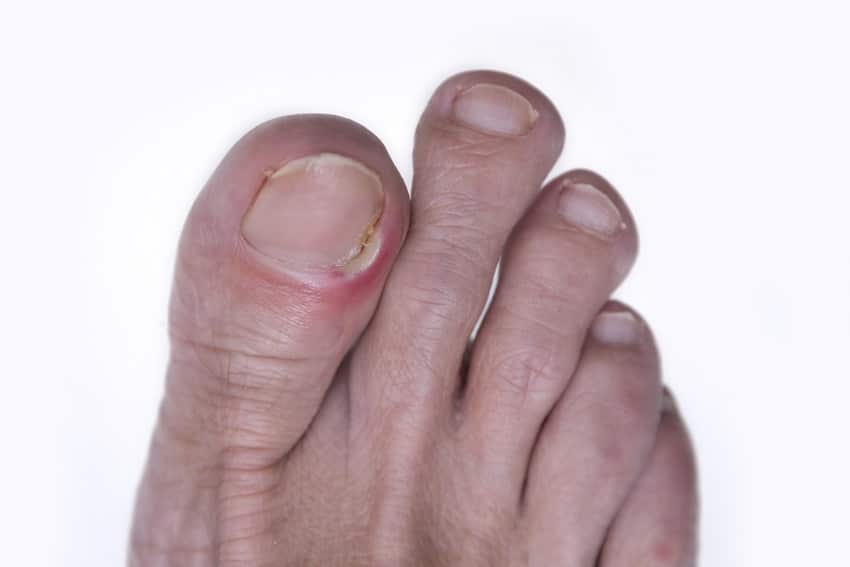
Ingrown Toenail: Home Treatment vs Seeing a Podiatrist | East Coast Podiatry
An ingrown toenail might start as a minor annoyance — a bit of tenderness when you put your shoes on — but left untreated, it can quickly escalate into a painful infection that makes walking difficult. One of the most common questions we hear at East Coast Podiatry Clinic in Newcastle is: "Can I just deal with this at home, or do I need to come in?"
The honest answer is: it depends. Some mild ingrown toenails can be managed safely at home. But there are clear signs that home treatment isn't enough — and waiting too long can make things significantly worse. Here's how to tell the difference.
What Exactly Is an Ingrown Toenail?
An ingrown toenail (medically known as onychocryptosis) occurs when the edge or corner of the nail grows into the surrounding skin instead of over it. The big toe is most commonly affected, but it can happen to any toe.
A related condition is an involuted nail — where the nail curls inward at the sides without fully piercing the skin. This can be just as painful as a true ingrown toenail, particularly if the nail is thick or not trimmed correctly.
Common causes include:
- Cutting nails too short or rounding the corners
- Wearing tight or narrow footwear
- Hereditary curved or wide nail shape
- Trauma to the toe (e.g. stubbing or dropping something on it)
- Nail picking or poor nail care
- Excessive sweating or poor foot hygiene
When Is It Safe to Treat an Ingrown Toenail at Home?
If your ingrown toenail is in its early stages — mild tenderness, slight redness, no signs of infection — you may be able to manage it at home for a short period. Here's what you can do:
Home treatment steps:
- Soak your foot in warm (not hot) water for 15–20 minutes, 2–3 times per day. This softens the skin and relieves pressure.
- Gently push the skin away from the nail edge using a clean cotton bud after soaking.
- Place a small piece of clean cotton wool or waxed dental floss under the corner of the nail to encourage it to grow above the skin.
- Apply an antiseptic cream to the area and cover with a clean bandage.
- Wear open-toed shoes or sandals to reduce pressure on the toe.
- Take an over-the-counter pain reliever such as ibuprofen if needed for pain relief.
Important: Home treatment is only appropriate for mild, early-stage ingrown toenails with no signs of infection. If you're not seeing improvement within a few days, or symptoms are getting worse, stop home treatment and see a podiatrist.
Never try to cut deeply into the nail or "dig out" the ingrown portion yourself. This can cause further damage, introduce bacteria, and significantly worsen an infection.
When Should You See a Podiatrist?
There are clear warning signs that an ingrown toenail needs professional attention. Don't delay if you notice any of the following:
See a podiatrist if you have:
- Increasing pain that doesn't improve with home care
- Significant swelling around the nail
- Redness spreading beyond the immediate nail area
- Pus or discharge from the toe
- Bleeding from the nail fold
- Warmth or throbbing in the toe
- A nail that has pierced the skin
- Recurrent ingrown toenails on the same toe
If you have diabetes, poor circulation, or a condition that affects your immune system — see a podiatrist immediately, even for a mild ingrown toenail. These conditions significantly increase the risk of serious infection and complications.
Left untreated, an infected ingrown toenail can spread to the underlying bone — a serious complication that requires hospitalisation. It's always better to get it checked early.
What Will a Podiatrist Do?
At East Coast Podiatry Clinic, we take a conservative approach first wherever possible. Here's what to expect:
Conservative treatment (for mild to moderate cases)
Your podiatrist will carefully remove the offending section of nail and drain any infection if present. This provides immediate pain relief — often in the same appointment. We'll also advise you on correct nail-trimming technique and footwear changes to reduce the risk of it coming back.
Partial Nail Avulsion (PNA) — minor nail surgery
For recurring or severe ingrown toenails, a Partial Nail Avulsion (PNA) is the most effective long-term solution. This minor procedure is performed in our clinic under local anaesthetic and takes around an hour. The offending section of nail is permanently removed using a chemical technique (phenolisation) to prevent regrowth.
The good news: you can walk out of the clinic immediately after the procedure. Most patients are surprised at how straightforward it is. The anaesthetic wears off within an hour or two, and the treated area heals within a couple of weeks.
What about the cosmetic result?
The remaining nail still grows normally and looks natural. Most patients are happy with the cosmetic outcome, and the permanent relief from pain makes it well worthwhile.
How to Prevent Ingrown Toenails
Prevention is always better than treatment. To reduce your risk:
- Cut toenails straight across — never round the corners or cut too short
- Keep nails at a moderate length — level with the tip of the toe
- Wear shoes with adequate room in the toe box — avoid tight or pointed footwear
- Keep feet clean and dry
- If you're prone to ingrown toenails, consider regular podiatry appointments for professional nail care
Book an Appointment at East Coast Podiatry Clinic, Newcastle
If you're struggling with a painful ingrown toenail in Newcastle, Lake Macquarie, Charlestown, Cardiff or the surrounding areas, our experienced podiatrists can help. We offer same-week appointments and can usually provide immediate pain relief on your first visit.
No referral is needed. Book online or call us today on (02) 4942 2550.
East Coast Podiatry Clinic
2/1 Glebe St, Kahibah NSW 2290
Phone: (02) 4942 2550
www.myfeet.net.au