Skip to content
  • Home
  • About Us
  • Services
    • Custom Orthotics
    • Heel Pain Treatment
    • Ingrown Toenail Treatment
    • Plantar Wart Treatment
    • Diabetes Foot Assessment
  • Blog
  • FAQ’s
  • Contact
Book Online
Conditions, Therapy

Chilblains — Why Your Toes Itch, Burn and Turn Purple in Winter (A Newcastle Podiatrist Explains)
June 22, 2026 Tim Foran No comments yet
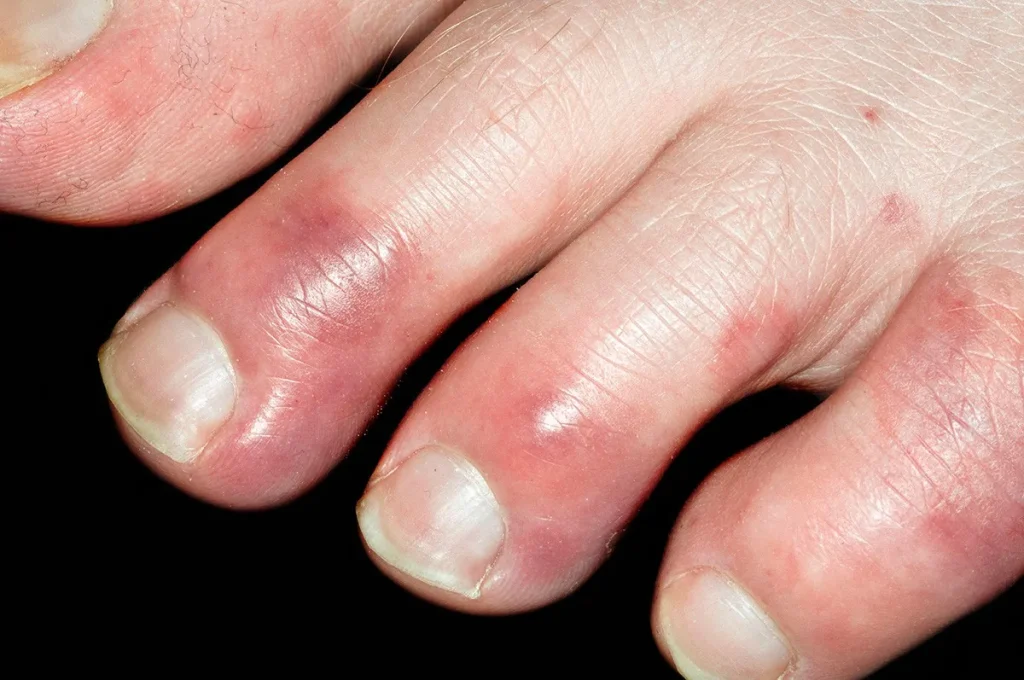
Toes affected by chilblains showing the typical red and purple discolouration and swelling that appears in cold winter weather

Every June and July, the same conversation happens in our treatment room: “My toes have gone red and purple, they itch like mad at night, and I have no idea what I’ve done to them.”

The answer is almost always chilblains. Newcastle winters might be mild by alpine standards, but chilblains don’t need snow — they thrive on exactly what we get here: chilly mornings, cold floors, and the great Australian tradition of going from freezing feet to a heater at full blast.

What Are Chilblains?

Chilblains (medically, pernio) are an abnormal reaction of the small blood vessels in your skin to cold. When your toes get cold, those tiny vessels constrict. If they’re then rewarmed too quickly, the vessels can’t cope with the sudden rush of blood returning — fluid leaks into the surrounding tissue, and the result is the inflamed, itchy, swollen patches we call chilblains. They typically appear several hours after the cold exposure, which is why people rarely connect the cause and effect.

What Do They Look and Feel Like?

  • Red, purple or blue patches, most commonly on the toes — but also fingers, ears and the nose
  • Intense itching or burning, classically worse at night when your feet warm up in bed
  • Swelling and tenderness of the affected toes
  • In more severe cases, blistering or broken skin — which needs prompt attention

Who Gets Chilblains?

Anyone can develop them, but some people are far more prone: women more than men, people with low body weight, those with poor circulation or Raynaud’s phenomenon (where fingers and toes turn white in the cold), smokers (nicotine constricts the very vessels involved), outdoor workers, and people living in homes that are cold all day and rapidly heated at night. Older adults and people with diabetes deserve special caution — more on that below.

The Biggest Mistake: Warming Cold Feet Too Fast

Here’s the part that surprises everyone: it’s usually not the cold that causes the chilblain — it’s the rewarming. Coming inside with frozen feet and putting them straight in front of the heater, on a hot water bottle, or under a hot shower is the classic trigger. The vessels are forced open too quickly, and the damage is done. If you remember one thing from this article: warm your feet up slowly.
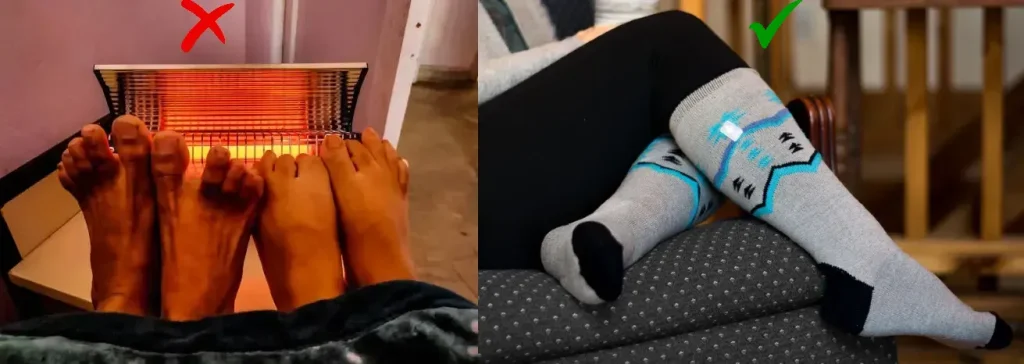
Do and don't graphic for chilblains prevention — avoid warming cold feet directly at a heater, instead rewarm gradually with warm wool socks

How to Treat Chilblains at Home

Do:

  • Keep your whole body warm, not just your feet — core warmth keeps blood flowing to your toes
  • Wear warm socks (wool is ideal) and properly insulated, roomy footwear
  • Rewarm cold feet gradually — at room temperature, not against a heat source
  • Keep moving — gentle activity is the best circulation booster there is
  • Moisturise daily to keep the skin supple and resistant to cracking

Don’t:

  • Put cold feet directly against heaters, hot water bottles, electric blankets or hot water
  • Scratch — broken skin over a chilblain heals slowly and can become infected
  • Wear tight shoes or compressive socks that further restrict blood flow
  • Smoke — nicotine constricts the small vessels that are already struggling

Most chilblains settle within one to three weeks with this approach, though they often return with the next cold snap unless the habits change too.

When Chilblains Are a Warning Sign

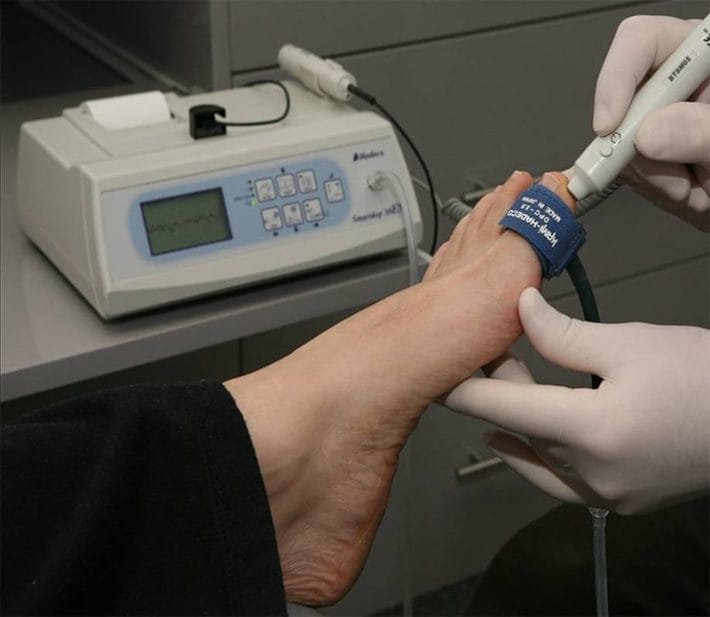
Occasional mild chilblains are a nuisance. But chilblains that are severe, recur every single winter, or are slow to heal can be a sign of an underlying circulation problem or a condition like Raynaud’s — and they’re worth investigating rather than enduring. At our clinic we can assess the blood supply to your feet properly, including Doppler assessment of the arteries, and refer on where needed. For anyone with diabetes, a chilblain with broken skin is never a wait-and-see situation — reduced sensation and healing capacity make even small wounds on the feet potentially serious. If that’s you, our diabetes foot assessment page explains how we monitor circulation and skin health through winter.

When Should You See a Podiatrist?

Book in if the skin has broken or blistered, if chilblains return every winter, if you have diabetes or known circulation problems, or if a chilblain hasn’t settled within two to three weeks of sensible home care. No referral is needed at East Coast Podiatry Clinic in Kahibah, and same-week appointments are available.

Book Online Today

If your chilblains keep coming back every winter, or the skin has broken, it’s time to have your circulation properly assessed. Book an appointment online or call us on (02) 4942 2550.

  • chilblains
  • chilblains treatment
  • cold feet
  • Newcastle podiatrist
  • toe pain
  • winter foot problems
Tim Foran

Post navigation

Previous

Leave a Reply Cancel reply

Your email address will not be published. Required fields are marked *

Search

Categories

  • Conditions (13)
  • Exercises (3)
  • Sporting (5)
  • Therapy (12)
  • Work Injury (4)

Recent posts

  • Toes affected by chilblains showing the typical red and purple discolouration and swelling that appears in cold winter weather
    Chilblains — Why Your Toes Itch, Burn and Turn Purple in Winter (A Newcastle Podiatrist Explains)
  • Anatomical diagram of a bunion (hallux valgus) showing the first metatarsal deviating outward and the big toe angling toward the second toe, with the bunion prominence at the first metatarsophalangeal joint
    Bunions in Newcastle — A Podiatrist’s Guide to What’s Actually Happening (and How Orthotics Help)
  • Medical illustration comparing a healthy toenail with an ingrown toenail showing swelling, infection and nail penetrating the flesh
    Ingrown Toenail Treatment in Newcastle — A Podiatrist’s Guide to Getting Lasting Relief

Tags

adult acquired flatfoot ankle sprain arch pain ball of foot pain bunion bunion hereditary bunion orthotics bunion pain bunion treatment Newcastle chilblains chilblains treatment cold feet crossover toe custom orthotics east coast podiatry clinic foot fracture foot pain Newcastle forefoot pain hallux valgus heel pain heel pain Newcastle ingrown toenail ingrown toenail treatment inner ankle pain metatarsalgia midfoot injury Morton's neuroma misdiagnosis Newcastle podiatrist orthotics for bunions orthotics Newcastle plantar fasciitis plantar fasciopathy plantar fasciosis plantar plate plantar plate tear podiatrist podiatry posterior tibial tendon dysfunction PTTD rugby league injury second MTPJ second MTPJ synovitis sports injury Newcastle synovitis winter foot problems

Related posts

Anatomical diagram of a bunion (hallux valgus) showing the first metatarsal deviating outward and the big toe angling toward the second toe, with the bunion prominence at the first metatarsophalangeal joint
Conditions, Therapy

Bunions in Newcastle — A Podiatrist’s Guide to What’s Actually Happening (and How Orthotics Help)

June 13, 2026 Tim Foran No comments yet

Got a bony bump at the base of your big toe that’s getting more painful, more prominent, or making shoe shopping a nightmare? Bunions are one of the most common foot conditions we see at East Coast Podiatry Clinic — and one of the most misunderstood. Newcastle podiatrist Tim Foran explains why bunions are mostly inherited, what’s actually happening inside the joint, and how custom orthotics change the forces driving the deformity.

Medical illustration comparing a healthy toenail with an ingrown toenail showing swelling, infection and nail penetrating the flesh
Conditions, Therapy

Ingrown Toenail Treatment in Newcastle — A Podiatrist’s Guide to Getting Lasting Relief

June 8, 2026 Tim Foran No comments yet

Got a toenail that’s red, swollen, and agony to touch — or that keeps flaring up no matter what you try? Ingrown toenails are one of the most common conditions we treat at East Coast Podiatry Clinic, and also one of the most incorrectly treated at home. Newcastle podiatrist Tim Foran explains why home remedies fail, what the procedure actually involves, and how to make sure it doesn’t come back.

Anatomical diagram of the plantar plate showing collateral ligaments, flexor tendons and plantar fascia, with a comparison of a healthy plantar plate and an elongated, torn plantar plate at the metatarsophalangeal joint.
Conditions, Work Injury

Plantar Plate Tears — Why This Forefoot Injury Is So Often Misdiagnosed (A Newcastle Podiatrist’s Guide)

May 27, 2026 Tim Foran No comments yet

Persistent pain under the ball of your foot near the second toe? It could be a plantar plate tear — one of the most commonly missed forefoot injuries. Newcastle podiatrist Tim Foran explains the symptoms, why it’s so often mistaken for a neuroma, and how early treatment can prevent the need for surgery.

Get in touch

  • Shop 2/1 Glebe Street, Kahibah
  • (02) 4942 2550
  • info@myfeet.net.au
Book an appointment

Services

  • Custom 3D Printed Orthotics
  • Heel Pain Treatment
  • Ingrown Toenail Treatment
  • Plantar Wart Treatment
  • Diabetes Foot Assessment

Hours

Monday 8:00 AM - 5:00 PM
Tuesday 8:00 AM - 4:00 PM
Wednesday 8:00 AM - 4:00 PM
Thursday 8:00 AM - 4:00 PM
Friday 8:00 AM - 2:00 PM
Saturday CLOSED
Sunday CLOSED

Find us

Open your preferred maps app for directions to our clinic.

Google Maps Opens in Google Maps ↗ Apple Maps Opens in Apple Maps ↗ Waze Opens in Waze ↗
📍 Shop 2/1 Glebe St, Kahibah NSW 2290