Heel Spurs — Do They Actually Cause Your Heel Pain? A Newcastle Podiatrist Explains
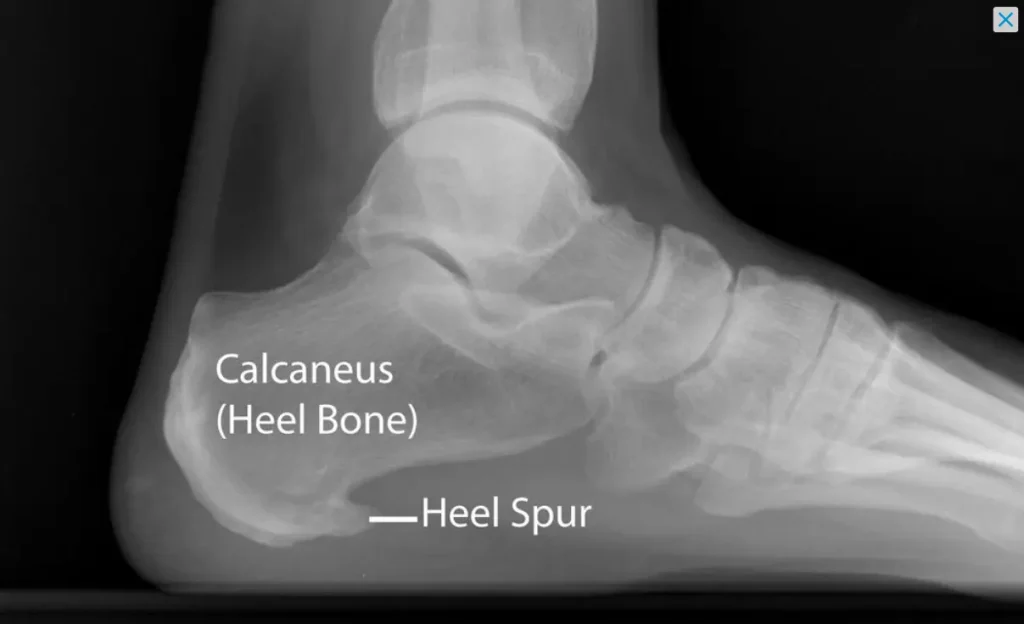
“I’ve got a heel spur.” Almost every week, someone arrives at East Coast Podiatry Clinic with an X-ray report in hand and that diagnosis already settled in their mind. They’ve usually been living with heel pain for months, and the spur on the image seems like the obvious villain — a sharp piece of bone digging into the heel with every step.
Here’s the surprise: in the vast majority of cases, heel spurs aren’t the cause of the pain at all. And understanding why changes everything about how we treat it.
What Is a Heel Spur?
A heel spur (calcaneal spur) is a smooth, bony growth on the underside of the heel bone, usually at or near the spot where the plantar fascia — the strong band of tissue supporting your arch — attaches. It develops gradually over months or years as the bone responds to sustained traction and load at that attachment point.
Heel spurs are remarkably common. Roughly one in ten people has one — and most of them have absolutely no heel pain.
The Surprising Truth About Heel Spurs
Research has consistently shown two things that surprise patients: plenty of people with heel spurs have never had a day of heel pain in their lives, and plenty of people with severe plantar heel pain have completely clear X-rays.
The spur is best understood as a footprint of long-term stress, not the source of the pain. It’s the bone’s slow response to years of pull from the plantar fascia — a consequence of the problem, not the problem itself. The spur also points forward along the line of the fascia, not downward into the tissue you walk on, which is why it isn’t ‘digging in’ with every step the way many people imagine.
So What’s Actually Causing Your Heel Pain?
In most cases, the real culprit is the plantar fascia itself — either acutely irritated (plantar fasciitis) or, in long-standing cases, degenerated (plantar fasciosis). The distinction matters because the two respond to different treatment, and we’ve written a full guide on exactly that: Plantar Fasciitis vs Plantar Fasciosis — What’s the Difference?
Less commonly, heel pain comes from other sources that mimic plantar fasciitis — fat pad atrophy, nerve entrapment (such as Baxter’s nerve), or even a stress reaction in the heel bone. This is exactly why a proper clinical assessment matters more than the X-ray: the image shows the spur, but the examination finds the pain.
Do Heel Spurs Need to Be Removed?
Almost never. Surgery for heel spurs is genuinely rare and reserved as an absolute last resort. When we treat the soft tissue properly, the pain resolves — and the spur simply stays where it is, doing what it was doing all along: nothing. Patients walk out of their final appointment pain-free with the spur still sitting there on the X-ray, which tells you everything about who the real troublemaker was.
How We Treat Heel Pain at East Coast Podiatry Clinic
Because the pain is a soft-tissue and load problem, that’s what we treat:
- Thorough assessment — including gait analysis to identify why your plantar fascia is overloaded in the first place
- Load management — practical adjustments to activity, standing time and training rather than blanket rest
- Strapping — for fast short-term relief and to confirm the diagnosis
- Targeted stretching and strengthening — for the calf, Achilles and plantar fascia
- Footwear advice — often one of the simplest and most effective changes
- Custom 3D printed orthotics — to reduce traction on the fascia where biomechanics are driving the problem
You can read more on our heel pain treatment page.
When Should You See a Podiatrist?
Classic warning signs include sharp pain under the heel with the first steps out of bed, pain after sitting for a while that eases as you warm up, and pain that’s gradually worsening over weeks. Heel pain that has persisted beyond a couple of weeks rarely resolves on its own — and the longer it’s left, the longer it typically takes to settle. No referral is needed to see us in Kahibah, and same-week appointments are available.
Book Online Today
Heel pain that’s been hanging around for weeks won’t fix itself — and the earlier it’s treated, the faster it settles. Book an appointment online or call us on (02) 4942 2550.