
Skip to content
  • Home
  • About Us
  • Services
    • Custom Orthotics
    • Heel Pain Treatment
    • Ingrown Toenail Treatment
    • Plantar Wart Treatment
    • Diabetes Foot Assessment
  • Blog
  • FAQ’s
  • Contact
Book Online
Conditions, Therapy

Diabetic Foot Checks in Newcastle — What Your GP’s EPC Referral Actually Covers
September 1, 2026 Tim Foran No comments yet
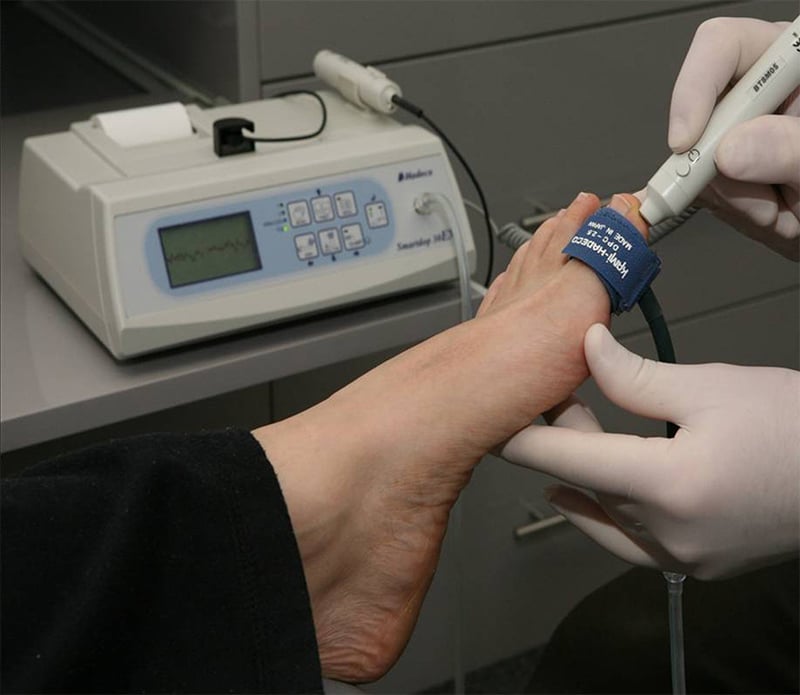
Handheld Doppler ultrasound being used to check circulation in a diabetic patient's foot

Your GP has handed you a referral form with “EPC” on it and told you to book in with a podiatrist for a diabetes foot check. Maybe your feet feel fine. Maybe you’re wondering why a foot appointment matters when your diabetes is managed by your GP and endocrinologist. Either way, this is one of the most valuable checks a person with diabetes can have — and it’s almost always fully or largely covered by Medicare.

Here’s what the referral actually means, and what to expect at your appointment.

What Is an EPC Referral?

EPC stands for Enhanced Primary Care — now more commonly called a Chronic Disease Management (CDM) plan. It’s a Medicare arrangement that lets your GP refer you to allied health providers, including podiatrists, for conditions like diabetes that need ongoing, coordinated care. Under this plan, eligible patients can access up to five allied health visits per calendar year with a Medicare rebate.

For diabetes specifically, a podiatry referral under this plan is one of the most common and important uses of those visits, because foot complications are one of the most serious — and most preventable — consequences of the disease.

Why Diabetes Makes Foot Checks Essential

Diabetes affects the feet in two main ways, and both can happen silently, without any pain to warn you.

Peripheral neuropathy — nerve damage that reduces sensation in the feet — means a cut, blister or pressure area can go completely unnoticed. Left untreated, a small wound can progress to a serious ulcer before it’s ever felt.

Peripheral vascular disease — reduced blood flow to the lower limbs — slows healing significantly, so even minor injuries can take far longer to close and are more prone to infection.

Combined, these two changes are why diabetic foot complications remain a leading cause of hospital admission and, in advanced cases, amputation — and why regular assessment matters even when your feet feel completely normal.

What Happens at a Diabetic Foot Assessment

A thorough assessment at East Coast Podiatry Clinic covers:

  • Vascular assessment — checking pulses and circulation, including Doppler studies where indicated, to assess blood flow to the feet
  • Neurological testing — sensation testing (monofilament and vibration) to check for early signs of nerve damage
  • Skin and nail check — identifying any areas of dryness, callus, fissuring or fungal infection that could become entry points for infection
  • Footwear assessment — checking that your shoes aren’t creating pressure areas you can’t feel
  • Risk stratification — classifying your feet as low, moderate or high risk, which determines how often you should be reviewed
  • Education — practical, everyday advice on checking your own feet and what to watch for between visits

You’ll walk away with a clear picture of where your foot health sits and a plan tailored to your risk level, not a generic checklist.

How Often Should You Be Checked?

This depends on your risk category. Low-risk patients with good sensation and circulation may only need an annual review. Moderate- and high-risk patients — those with reduced sensation, poor circulation, or a history of ulceration — are typically reviewed every three to six months, or more frequently if a concern is identified. Your podiatrist will confirm the right interval for you at your first visit.

When Should You See a Podiatrist?

Beyond your scheduled review, see us promptly if you notice any cut, blister, redness, swelling or discolouration on your feet — even if it doesn’t hurt. With diabetes, the absence of pain is not a reassurance; it’s often exactly why early problems get missed. Same-week appointments are available for anything that looks like it’s not healing as expected.

Book Online Today

If your GP has given you an EPC referral, or you’d simply like a baseline check of your foot health, booking early means any risk factors are caught before they become a problem. Book an appointment online or call us on (02) 4942 2550.

  • diabetes foot care Newcastle
  • diabetic foot assessment
  • diabetic neuropathy
  • EPC referral podiatrist
  • foot ulcer prevention
  • Medicare podiatry Newcastle
  • Newcastle podiatrist
Tim Foran

Post navigation

Previous

Leave a Reply Cancel reply

Your email address will not be published. Required fields are marked *

Search

Categories

  • Conditions (16)
  • Exercises (4)
  • Sporting (6)
  • Therapy (14)
  • Work Injury (4)

Recent posts

  • Handheld Doppler ultrasound being used to check circulation in a diabetic patient's foot
    Diabetic Foot Checks in Newcastle — What Your GP’s EPC Referral Actually Covers
  • Side-on X-ray of a heel showing a calcaneal heel spur at the underside of the heel bone where the plantar fascia attaches
    Heel Spurs — Do They Actually Cause Your Heel Pain? A Newcastle Podiatrist Explains
  • Netball player landing on one leg during a game — the abrupt single-leg landings required by netball's footwork rule are the main cause of netball ankle injuries
    Netball Ankle Injuries — Why Netballers Roll More Ankles Than Anyone (and How to Stop It Happening Again)

Tags

adult acquired flatfoot ankle rehabilitation ankle sprain arch pain ball of foot pain bunion orthotics chilblains chilblains treatment cold feet crossover toe custom orthotics diabetes foot care Newcastle diabetic foot assessment diabetic neuropathy east coast podiatry clinic EPC referral podiatrist foot pain Newcastle foot ulcer prevention forefoot pain heel pain heel pain Newcastle ingrown toenail ingrown toenail Newcastle ingrown toenail treatment inner ankle pain metatarsalgia Morton's neuroma misdiagnosis nail surgery Newcastle podiatrist orthotics Newcastle partial nail avulsion plantar fasciitis plantar plate plantar plate tear PNA podiatrist podiatry posterior tibial tendon dysfunction PTTD second MTPJ second MTPJ synovitis sports injury Newcastle toenail infection toe pain winter sport Newcastle

Related posts

Side-on X-ray of a heel showing a calcaneal heel spur at the underside of the heel bone where the plantar fascia attaches
Conditions, Therapy

Heel Spurs — Do They Actually Cause Your Heel Pain? A Newcastle Podiatrist Explains

August 3, 2026 Tim Foran No comments yet

Been told you have a heel spur on X-ray? Here’s the surprise: the spur is almost never the cause of your pain. Newcastle podiatrist Tim Foran explains what heel spurs really are, what’s actually causing the pain, and why the spur almost never needs to be removed.

Toes affected by chilblains showing the typical red and purple discolouration and swelling that appears in cold winter weather
Conditions, Therapy

Chilblains — Why Your Toes Itch, Burn and Turn Purple in Winter (A Newcastle Podiatrist Explains)

June 22, 2026 Tim Foran No comments yet

Itchy, burning toes that turn red or purple every winter? They’re almost certainly chilblains — and the way most people warm their feet up is exactly what causes them. Newcastle podiatrist Tim Foran explains how to treat chilblains safely and when they’re a warning sign of something more.

Anatomical diagram of a bunion (hallux valgus) showing the first metatarsal deviating outward and the big toe angling toward the second toe, with the bunion prominence at the first metatarsophalangeal joint
Conditions, Therapy

Bunions in Newcastle — A Podiatrist’s Guide to What’s Actually Happening (and How Orthotics Help)

June 13, 2026 Tim Foran No comments yet

Got a bony bump at the base of your big toe that’s getting more painful, more prominent, or making shoe shopping a nightmare? Bunions are one of the most common foot conditions we see at East Coast Podiatry Clinic — and one of the most misunderstood. Newcastle podiatrist Tim Foran explains why bunions are mostly inherited, what’s actually happening inside the joint, and how custom orthotics change the forces driving the deformity.

Get in touch

  • Shop 2/1 Glebe Street, Kahibah
  • (02) 4942 2550
  • info@myfeet.net.au
Book an appointment

Services

  • Custom 3D Printed Orthotics
  • Heel Pain Treatment
  • Ingrown Toenail Treatment
  • Plantar Wart Treatment
  • Diabetes Foot Assessment

Hours

Monday 8:00 AM - 5:00 PM
Tuesday 8:00 AM - 4:00 PM
Wednesday 8:00 AM - 4:00 PM
Thursday 8:00 AM - 4:00 PM
Friday 8:00 AM - 2:00 PM
Saturday CLOSED
Sunday CLOSED

Find us

Open your preferred maps app for directions to our clinic.

Google Maps Opens in Google Maps ↗ Apple Maps Opens in Apple Maps ↗ Waze Opens in Waze ↗
📍 Shop 2/1 Glebe St, Kahibah NSW 2290