Skip to content
  • Home
  • About Us
  • Services
    • Custom Orthotics
    • Heel Pain Treatment
    • Ingrown Toenail Treatment
    • Plantar Wart Treatment
    • Diabetes Foot Assessment
  • Blog
  • FAQ’s
  • Contact
Book Online
Conditions, Therapy

Plantar Warts in Newcastle — A Podiatrist’s Guide to Getting Rid of Them for Good
September 15, 2026 Tim Foran No comments yet
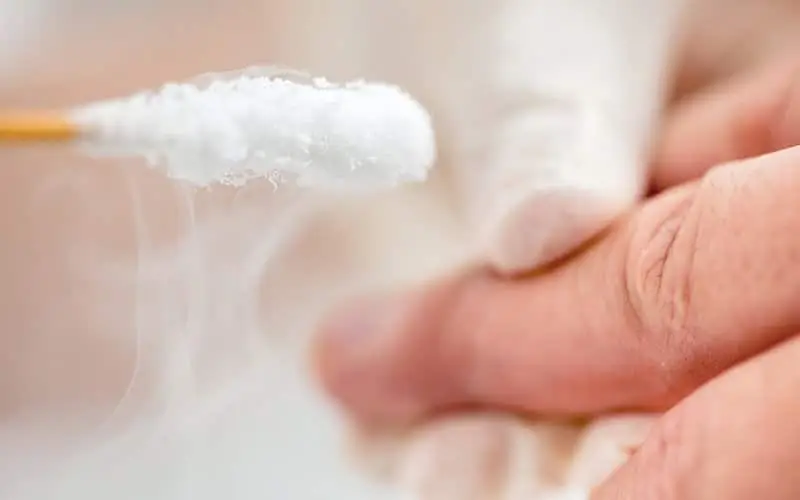
Cryotherapy treatment applying liquid nitrogen to a plantar wart

You’ve tried the pharmacy freeze spray. Maybe the duct tape trick, or one of the acid pens from the chemist. Weeks later, the mark on the sole of your foot is still there — maybe even bigger. Plantar warts are one of the most common reasons people end up at East Coast Podiatry Clinic, and also one of the most misunderstood, because they don’t behave like warts anywhere else on the body.

What Is a Plantar Wart?

A plantar wart (verruca) is a small, benign skin growth caused by the human papillomavirus (HPV) entering through tiny breaks in the skin on the sole of the foot. Because it’s on a weight-bearing surface, the pressure of walking pushes the wart inward rather than outward, so it often looks like a flat, thickened patch of skin rather than the raised bump you’d see on a hand. The tell-tale sign is a cluster of small black or brown pinpoints within it — these are tiny clotted blood vessels, not dirt, and they’re one of the easiest ways to tell a wart apart from a corn or callus.

Why Plantar Warts Are So Stubborn

Plantar warts are notoriously persistent for a few reasons. The virus lives in the skin layers, not just on the surface, so treatments that only address the visible portion often leave the underlying infection intact. The thick, weight-bearing skin on the sole is also harder for topical treatments to penetrate than skin elsewhere on the body. And because warts are more common in children and teenagers — whose immune systems haven’t yet encountered the virus — they’re frequently picked up and spread in communal bare-foot areas like pools, change rooms and school showers.

Some plantar warts do eventually clear on their own as the immune system catches up, particularly in children, but this can take months to years, and in the meantime the wart can spread, multiply into a cluster (a “mosaic” wart), or become painful enough to change the way you walk.

Common Myths About Treating Warts at Home

A few things worth knowing before reaching for a pharmacy remedy:

  • “It’ll just go away eventually” — sometimes true, but often not, and leaving it untreated gives it more time to spread to other areas of the foot or to household members
  • Duct tape and home freezing kits — can work for small, superficial warts, but pharmacy-grade freezing is far less effective than the professional-grade cryotherapy used in clinic, and repeated home attempts can damage surrounding healthy skin without ever reaching the wart itself
  • Cutting or picking at it — risks spreading the virus to surrounding skin and introducing infection

How We Treat Plantar Warts at East Coast Podiatry Clinic

Treatment is tailored to the size, depth and number of warts present, and often combines more than one approach:

  • Debridement — carefully paring back the thickened overlying skin so treatment can actually reach the infected tissue
  • Cryotherapy — professional-strength freezing to destroy the infected tissue, typically repeated over several sessions
  • 70% nitric acid — a caustic application that chemically destroys the wart tissue, applied and monitored in clinic
  • Upton’s paste — a keratolytic paste treatment used for gradual resolution, particularly suited to stubborn or resistant warts
  • Footwear and hygiene advice — practical steps to stop it spreading to other areas of the foot or to family members

Most warts respond well to treatment, though some — particularly long-standing or mosaic warts — take several sessions to fully resolve. We’ll give you a realistic timeframe once we’ve assessed what you’re dealing with.

When Should You See a Podiatrist?

See us if a wart is painful, spreading, multiplying, or hasn’t responded to a reasonable trial of home treatment. It’s also worth getting checked sooner rather than later if you have diabetes or a compromised immune system, or if you’re not fully sure it’s a wart and not a corn, callus or something else — the treatments for each are different, and treating the wrong one can make things worse.

Book Online Today

A plantar wart rarely gets easier to treat the longer it’s left. Book an appointment online or call us on (02) 4942 2550.

  • HPV foot
  • Newcastle podiatrist
  • plantar wart
  • plantar wart removal Newcastle
  • verruca treatment
  • wart treatment podiatrist
Tim Foran

Post navigation

Previous

Leave a Reply Cancel reply

Your email address will not be published. Required fields are marked *

Search

Categories

  • Conditions (17)
  • Exercises (4)
  • Sporting (6)
  • Therapy (15)
  • Work Injury (4)

Recent posts

  • Cryotherapy treatment applying liquid nitrogen to a plantar wart
    Plantar Warts in Newcastle — A Podiatrist’s Guide to Getting Rid of Them for Good
  • Handheld Doppler ultrasound being used to check circulation in a diabetic patient's foot
    Diabetic Foot Checks in Newcastle — What Your GP’s EPC Referral Actually Covers
  • Side-on X-ray of a heel showing a calcaneal heel spur at the underside of the heel bone where the plantar fascia attaches
    Heel Spurs — Do They Actually Cause Your Heel Pain? A Newcastle Podiatrist Explains

Tags

adult acquired flatfoot ankle rehabilitation ankle sprain arch pain ball of foot pain bunion bunion orthotics bunion pain bunion treatment Newcastle crossover toe custom orthotics diabetes foot care Newcastle diabetic foot assessment diabetic neuropathy east coast podiatry clinic EPC referral podiatrist foot pain Newcastle foot ulcer prevention forefoot pain hallux valgus heel pain heel pain Newcastle ingrown toenail ingrown toenail Newcastle ingrown toenail treatment inner ankle pain Medicare podiatry Newcastle metatarsalgia Morton's neuroma misdiagnosis nail surgery Newcastle podiatrist orthotics Newcastle partial nail avulsion plantar fasciitis plantar plate plantar plate tear plantar wart PNA podiatrist podiatry posterior tibial tendon dysfunction second MTPJ sports injury Newcastle toenail infection winter sport Newcastle

Related posts

Handheld Doppler ultrasound being used to check circulation in a diabetic patient's foot
Conditions, Therapy

Diabetic Foot Checks in Newcastle — What Your GP’s EPC Referral Actually Covers

September 1, 2026 Tim Foran No comments yet

Your GP has referred you for a diabetic foot check under an EPC plan but you’re not sure what that actually means. Newcastle podiatrist Tim Foran explains what an EPC referral covers, what happens at a diabetic foot assessment, and why it’s one of the most important checks a person with diabetes can have.

Side-on X-ray of a heel showing a calcaneal heel spur at the underside of the heel bone where the plantar fascia attaches
Conditions, Therapy

Heel Spurs — Do They Actually Cause Your Heel Pain? A Newcastle Podiatrist Explains

August 3, 2026 Tim Foran No comments yet

Been told you have a heel spur on X-ray? Here’s the surprise: the spur is almost never the cause of your pain. Newcastle podiatrist Tim Foran explains what heel spurs really are, what’s actually causing the pain, and why the spur almost never needs to be removed.

Toes affected by chilblains showing the typical red and purple discolouration and swelling that appears in cold winter weather
Conditions, Therapy

Chilblains — Why Your Toes Itch, Burn and Turn Purple in Winter (A Newcastle Podiatrist Explains)

June 22, 2026 Tim Foran No comments yet

Itchy, burning toes that turn red or purple every winter? They’re almost certainly chilblains — and the way most people warm their feet up is exactly what causes them. Newcastle podiatrist Tim Foran explains how to treat chilblains safely and when they’re a warning sign of something more.

Get in touch

  • Shop 2/1 Glebe Street, Kahibah
  • (02) 4942 2550
  • info@myfeet.net.au
Book an appointment

Services

  • Custom 3D Printed Orthotics
  • Heel Pain Treatment
  • Ingrown Toenail Treatment
  • Plantar Wart Treatment
  • Diabetes Foot Assessment

Hours

Monday8:00 AM – 5:00 PM
Tuesday8:00 AM – 4:00 PM
Wednesday8:00 AM – 4:00 PM
Thursday8:00 AM – 4:00 PM
Friday8:00 AM – 2:00 PM
SaturdayCLOSED
SundayCLOSED
Checking hours…

Find us

Open your preferred maps app for directions to our clinic.

Google Maps Opens in Google Maps ↗ Apple Maps Opens in Apple Maps ↗ Waze Opens in Waze ↗
📍 Shop 2/1 Glebe St, Kahibah NSW 2290