Skip to content
  • Home
  • About Us
  • Services
    • Custom Orthotics
    • Heel Pain Treatment
    • Ingrown Toenail Treatment
    • Plantar Wart Treatment
    • Diabetes Foot Assessment
  • Blog
  • FAQ’s
  • Contact
Book Online
Conditions, Exercises, Sporting

Netball Ankle Injuries — Why Netballers Roll More Ankles Than Anyone (and How to Stop It Happening Again)
July 6, 2026 Tim Foran No comments yet
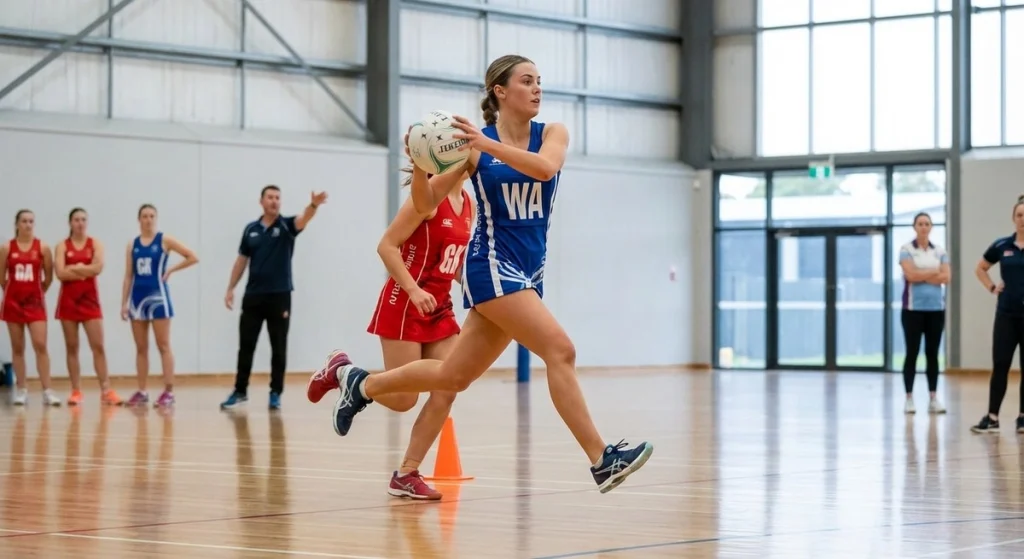
Netball player landing on one leg during a game — the abrupt single-leg landings required by netball's footwork rule are the main cause of netball ankle injuries

Walk past any netball court across Newcastle and Lake Macquarie on a Saturday in winter and you’ll see it eventually: a player lands from a contest, the ankle gives way, and she’s helped to the sideline. Ankle injuries are the number one injury in netball — by most counts they account for the largest share of all netball injuries at every level, from NetSetGO to representative grade.

That’s not bad luck. It’s built into the way the game is played — which is also why preventing the next sprain is so achievable once you understand it.

Why Netball Is So Tough on Ankles

Netball’s footwork rule is the culprit. Because players can’t run with the ball, the game demands abrupt single-leg landings and instant deceleration — catching at full sprint and stopping within a step, over and over for four quarters. Add pivoting on a planted foot, leaping contests where players land in traffic, and hard court surfaces, and you have a sport practically engineered to test ankle ligaments. The single most common mechanism we see? Landing on another player’s foot — the ankle rolls inward before there’s any chance to react.

What Actually Happens When You “Roll” an Ankle

Most netball ankle injuries are inversion sprains — the foot rolls inward, stretching or tearing the ligaments on the outside of the ankle (most often the ATFL, the ligament at the front-outside). Sprains range from a mild stretch to a complete tear, and the right early management makes a real difference to how fast and how completely you recover. We’ve covered the full treatment pathway — including what to do in the first 48 hours — in our ankle sprain treatment guide.

“It’s Just a Sprain” — The Most Costly Sentence in Netball

Here’s the statistic every netballer should know: a large proportion of people who sprain an ankle — research commonly puts it around 30 to 40 per cent — go on to develop chronic ankle instability, where the ankle keeps giving way long after the original injury. The biggest predictor isn’t how bad the first sprain was. It’s whether it was properly rehabilitated.

The trap is that pain settles well before the ankle is actually ready. Most players are walking comfortably in a week or two, declare themselves fixed, and go back to netball with an ankle that has lost strength, balance control and reaction speed. The re-sprain usually isn’t far away — and each one stretches the ligaments further.

Getting Back on Court Safely

Good ankle rehab is staged, and being pain-free only gets you partway through:

  • Protect and settle — early swelling control, relative rest and protected movement in the first days
  • Restore movement — regaining full ankle range, especially the bend you need to land and lunge
  • Rebuild strength — calf and, critically, the peroneal muscles along the outside of the lower leg that resist the rolling motion
  • Retrain balance — single-leg balance and reaction work, the most neglected and most protective stage of all
  • Return to netball movements — landing, jumping, change of direction and contest work, built up gradually
  • Graded return to play — full training before full games, every time

Brace, Tape or Neither?

This is one area where the research is refreshingly clear: for players with a previous ankle sprain, wearing a brace or taping for netball significantly reduces the risk of re-injury. And no — used alongside a proper strengthening program, bracing does not ‘weaken the ankle’. For a first-time healthy ankle the case is less compelling, but for anyone with a sprain history, ankle support on court is one of the cheapest insurance policies in sport. We can advise which option suits your ankle and your budget.

Don’t Forget the Shoes

Running shoes are designed for going forward; netball is a sideways game. Netball-specific or court shoes offer the lateral stability and outsole grip the sport demands, and worn-out shoes — compressed midsoles, smooth outsoles — measurably increase the workload on your ligaments. If your court shoes are more than a season or two old, they’ve probably retired before you have.

When Should You See a Podiatrist?

Get assessed if you couldn’t put weight on the ankle after injuring it, if there’s tenderness over the bones themselves, if the ankle is still swollen or feels unstable weeks later, or if you’re stuck in the sprain–recover–sprain cycle. We assess the injury properly, rule out anything more serious, and build a rehab and prevention plan that gets you back on court — and keeps you there. You can also read our broader guide to sports injuries in Newcastle. No referral needed, and same-week appointments are available.

Book Online Today

Whether it’s a fresh sprain or an ankle that’s never felt right since the last one, proper rehab is what keeps you on court. Book an appointment online or call us on (02) 4942 2550.

  • ankle rehabilitation
  • ankle sprain
  • netball ankle injuries
  • netball injury
  • sports injury Newcastle
  • winter sport Newcastle
Tim Foran

Post navigation

Previous

Leave a Reply Cancel reply

Your email address will not be published. Required fields are marked *

Search

Categories

  • Conditions (14)
  • Exercises (4)
  • Sporting (6)
  • Therapy (12)
  • Work Injury (4)

Recent posts

  • Netball player landing on one leg during a game — the abrupt single-leg landings required by netball's footwork rule are the main cause of netball ankle injuries
    Netball Ankle Injuries — Why Netballers Roll More Ankles Than Anyone (and How to Stop It Happening Again)
  • Toes affected by chilblains showing the typical red and purple discolouration and swelling that appears in cold winter weather
    Chilblains — Why Your Toes Itch, Burn and Turn Purple in Winter (A Newcastle Podiatrist Explains)
  • Anatomical diagram of a bunion (hallux valgus) showing the first metatarsal deviating outward and the big toe angling toward the second toe, with the bunion prominence at the first metatarsophalangeal joint
    Bunions in Newcastle — A Podiatrist’s Guide to What’s Actually Happening (and How Orthotics Help)

Tags

adult acquired flatfoot ankle rehabilitation ankle sprain arch pain ball of foot pain bunion bunion hereditary bunion pain bunion treatment Newcastle chilblains chilblains treatment crossover toe custom orthotics east coast podiatry clinic foot pain Newcastle forefoot pain hallux valgus heel pain heel pain Newcastle ingrown toenail ingrown toenail treatment inner ankle pain metatarsalgia Morton's neuroma misdiagnosis netball ankle injuries netball injury Newcastle podiatrist orthotics for bunions orthotics Newcastle plantar fasciitis plantar fasciopathy plantar fasciosis plantar plate plantar plate tear podiatrist podiatry posterior tibial tendon dysfunction PTTD rugby league injury second MTPJ second MTPJ synovitis sports injury Newcastle synovitis winter foot problems winter sport Newcastle

Related posts

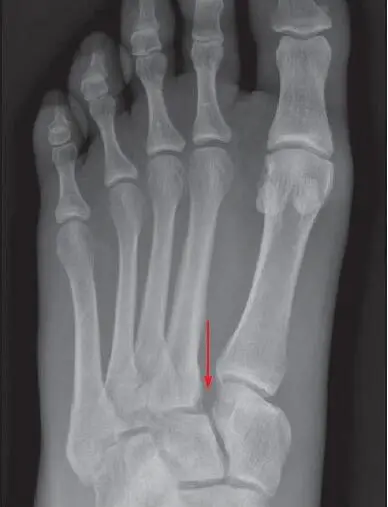
X-ray of a foot showing a Lisfranc injury with a red arrow pointing to a small bone fragment between the first and second metatarsal bases — the classic "fleck sign" of a torn Lisfranc ligament
Conditions, Sporting

Lisfranc Injuries — A Newcastle Podiatrist’s Guide to the Midfoot Injury That Sidelines Knights and Weekend Warriors Alike

May 18, 2026 Tim Foran No comments yet

Midfoot pain after a twist, fall or tackle that just won’t settle? It could be a Lisfranc injury — one of the most commonly missed foot injuries, and serious if left untreated. Newcastle podiatrist Tim Foran explains the warning signs, why it’s so often mistaken for a simple sprain, and what happens if it’s not treated early.

Runner stretching calf against a wall — sports injury prevention
Exercises, Sporting

Sports Injuries in Newcastle — A Podiatrist’s Guide to Prevention, Treatment & Getting Back in the Game

May 17, 2026 Tim Foran No comments yet

Carrying a niggle that won’t settle, or recovering from an ankle sprain, Achilles injury or shin splints? Newcastle podiatrist Tim Foran covers the most common sports injuries affecting the foot and lower leg, what the evidence actually says about treating them, and how to get back to sport without making things worse.

Young athlete in football kit holding their foot with heel pain after sport — a typical presentation of Sever's disease
Conditions, Sporting

My Child’s Heel is Hurting — Is it Sever’s Disease? A Newcastle Podiatrist Explains

May 14, 2026 Tim Foran No comments yet

Has your child been complaining of heel pain since winter sport started? It’s likely Sever’s disease — an irritation of the heel’s growth plate common in active kids aged 8–14. Newcastle podiatrist Tim Foran explains why it happens, what makes it worse, and how to keep your young athlete on the field.

Get in touch

  • Shop 2/1 Glebe Street, Kahibah
  • (02) 4942 2550
  • info@myfeet.net.au
Book an appointment

Services

  • Custom 3D Printed Orthotics
  • Heel Pain Treatment
  • Ingrown Toenail Treatment
  • Plantar Wart Treatment
  • Diabetes Foot Assessment

Hours

Monday 8:00 AM - 5:00 PM
Tuesday 8:00 AM - 4:00 PM
Wednesday 8:00 AM - 4:00 PM
Thursday 8:00 AM - 4:00 PM
Friday 8:00 AM - 2:00 PM
Saturday CLOSED
Sunday CLOSED

Find us

Open your preferred maps app for directions to our clinic.

Google Maps Opens in Google Maps ↗ Apple Maps Opens in Apple Maps ↗ Waze Opens in Waze ↗
📍 Shop 2/1 Glebe St, Kahibah NSW 2290