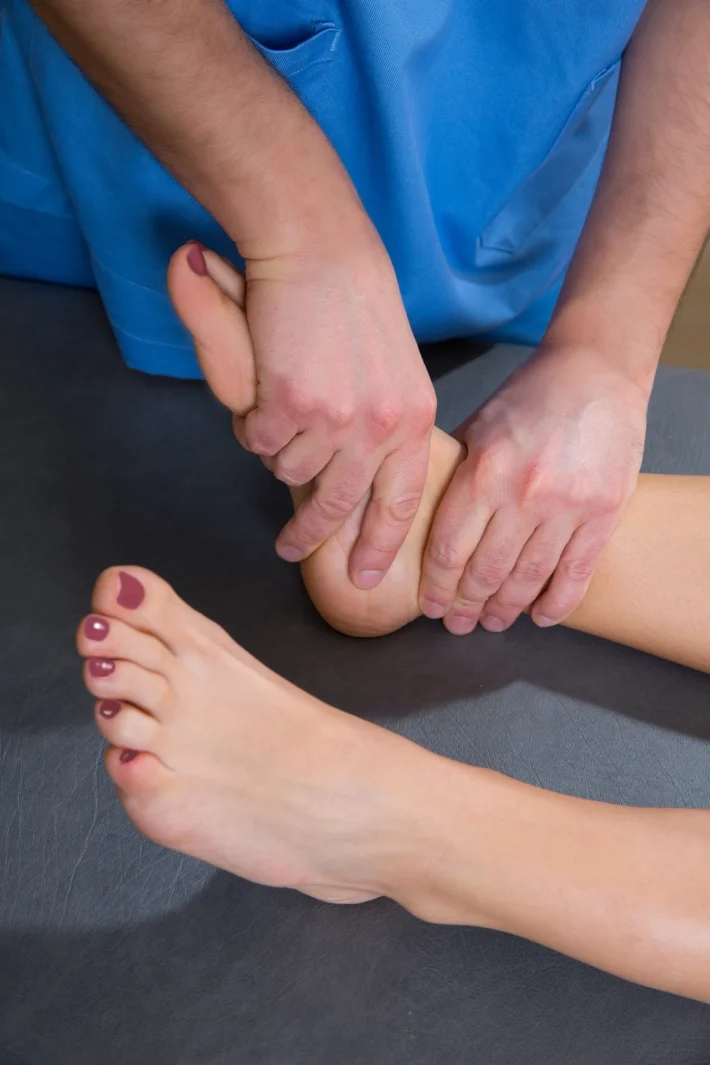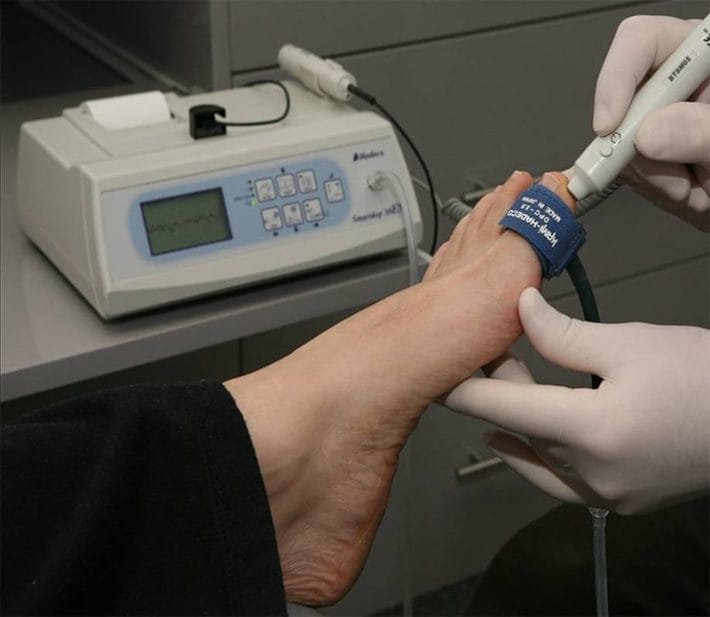
Lisfranc Injuries — A Newcastle Podiatrist’s Guide to the Midfoot Injury That Sidelines Knights and Weekend Warriors Alike
If you follow the NRL, you’ve probably heard the word “Lisfranc” more than you’d like in recent seasons. Latrell Mitchell, Connor Watson, Corey Horsburgh — Lisfranc injuries have sidelined some of the toughest players in Rugby League for months at a time. But it’s not just professional athletes. We see Lisfranc injuries in weekend touch footy players, hikers, motorcyclists and even people who’ve simply stepped awkwardly off a kerb in the wrong way.
The reason this injury matters is that it’s easy to miss, frequently undertreated, and can leave permanent midfoot problems if it isn’t picked up early.
At East Coast Podiatry Clinic in Kahibah, we assess, manage and rehabilitate Lisfranc injuries for patients across Newcastle and the Hunter region.
📞 Suspect a Lisfranc injury? Don’t wait: (02) 4942 2550 · Book online
What is a Lisfranc injury?
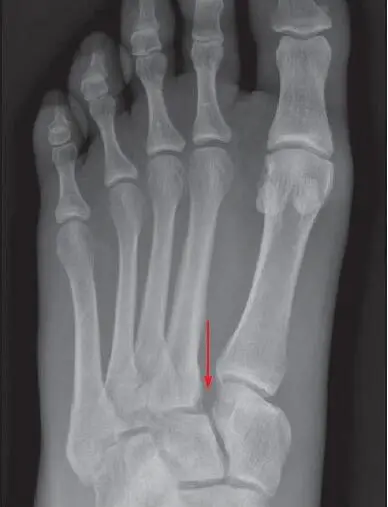
The Lisfranc joint is the bridge between your forefoot and your midfoot — specifically, where the long bones of your toes (the metatarsals) meet the bones of the midfoot (the cuneiforms and cuboid). Holding this joint complex together is a system of strong ligaments, including the critical Lisfranc ligament that runs between the second metatarsal and the medial cuneiform.
A Lisfranc injury is damage to any of these bones or ligaments. It ranges from:
- A subtle ligament sprain — easy to mistake for a regular midfoot sprain
- A partial ligament tear with some joint instability
- A complete dislocation or fracture-dislocation of the midfoot
The injury is named after Jacques Lisfranc de St. Martin, a French surgeon in Napoleon’s army who described it in cavalry soldiers thrown from horses with their foot caught in the stirrup. The mechanism hasn’t changed much — it’s still a foot that’s planted while the body twists or falls over it.
How does it happen?
Most Lisfranc injuries we see come from one of these mechanisms:
- Sport with a planted foot and a twisting force — being tackled while the foot is stuck in the turf (the classic NRL injury), pivoting in basketball or netball, stepping awkwardly in football boots
- A fall onto a pointed foot — landing from a jump or fall with the foot in plantarflexion
- Direct trauma — something heavy dropping on the midfoot, or being stepped on during a scrum or ruck
- Low-energy missteps — stepping off a kerb wrong, missing a step on stairs, slipping off a ladder rung
- Motor vehicle and motorbike accidents — the foot trapped against the floor or pedal
The injury that took out Latrell Mitchell was the classic high-energy sporting mechanism — foot planted, body driven over it. But the missed steps and slips account for a surprising number of cases too.
What does it feel like?
The classic symptoms of a Lisfranc injury are:
- Significant midfoot pain, especially with weight-bearing
- Swelling across the top of the foot, often appearing within hours
- Bruising on the sole of the foot — this is the most important red flag. Bruising under the arch is rarely seen with a simple sprain and strongly suggests a Lisfranc injury
- Difficulty walking — you may still be able to walk, but it hurts, and pushing off is particularly painful
- Pain when twisting the forefoot relative to the midfoot
- A feeling that the midfoot is unstable or “giving way”
- A gap or step visible between the first and second toes when looking at the top of the foot
The biggest trap with Lisfranc injuries is that mild ones look like a regular sprain. People hobble on for days or weeks, only to find out later that they’ve torn a ligament that needed early stabilisation.
If you have midfoot pain after a twist or impact and bruising on the sole of your foot — get it imaged. Don’t wait.
Why Lisfranc injuries get missed
Around 20% of Lisfranc injuries are missed on initial assessment. Here’s why:
- Subtle injuries don’t show on X-ray — a purely ligamentous Lisfranc tear can look normal on a standard X-ray. Weight-bearing X-rays or CT/MRI are often needed.
- The pain isn’t always severe — mild cases feel like a sprained midfoot
- People keep walking on it — and assume “if I can walk, it can’t be that bad”
- It’s a less common injury — many first-responders look for ankle sprains and metatarsal fractures and overlook the midfoot
- The bruising sign is subtle early on — and develops over 24–48 hours
If you’ve had a midfoot injury and the diagnosis was “sprain” but it’s not getting better after a week or two — push for further imaging.
When should you see a podiatrist (or go to ED)?
Some Lisfranc injuries are emergencies. Go to the Emergency Department immediately if:
- You can’t bear weight on the foot at all
- There’s obvious deformity or the foot looks misshapen
- Bruising appears rapidly on the sole of the foot
- The pain is severe and the foot is swelling fast
- You suspect a fracture-dislocation
For less severe presentations — pain that lets you walk but isn’t settling, suspected mild ligament injuries, or returning to sport after a confirmed Lisfranc — book a podiatry assessment within a few days. The earlier we identify and stabilise the injury, the better the long-term outcome.
How Lisfranc injuries are treated
Treatment depends entirely on whether the joint is stable or unstable.
Stable injuries (ligament intact, no displacement)
- Immobilisation in a moon boot or cast for 6 weeks
- Non-weight-bearing or partial weight-bearing initially
- Gradual return to weight-bearing under guidance
- Rehabilitation — strengthening, balance, gait retraining
- Close follow-up imaging to make sure the joint stays stable
Unstable injuries (ligament torn, bones displaced)
- Surgical referral — these almost always require surgical stabilisation, either with screws, plates, or fusion
- Surgery is followed by 6–12 weeks of immobilisation and a structured rehabilitation program
- Return to high-level sport typically takes 6–9 months, sometimes longer
The role of a podiatrist in Lisfranc injuries is to:
- Identify and stage the injury (or refer urgently if it’s beyond conservative management)
- Co-manage rehabilitation alongside the orthopaedic team
- Provide custom orthotics to support the midfoot through recovery and protect it long-term
- Manage residual symptoms and biomechanical changes after the joint has healed
- Guide return-to-sport progression
We work closely with local sports physicians and orthopaedic surgeons for the cases that need surgical input.
Why early treatment matters
A Lisfranc injury that’s properly diagnosed and stabilised early — whether conservatively or surgically — has good long-term outcomes. The midfoot heals, the joint stays aligned, and most people get back to normal activity.
A Lisfranc injury that’s missed or undertreated often progresses to midfoot arthritis. The joint surfaces wear unevenly, the arch can collapse, and people end up with chronic midfoot pain that may eventually need fusion surgery. That’s a much bigger problem than the original injury.
This is why we push so hard on getting suspicious midfoot injuries imaged properly the first time around.
Returning to sport after a Lisfranc injury
Whether you’re a weekend warrior or a serious athlete, return to sport after a Lisfranc injury is gradual and earned, not rushed. The general progression looks like:
- Weeks 0–6 — immobilisation, non- or partial weight-bearing
- Weeks 6–12 — gradual return to full weight-bearing, range of motion work, gentle strengthening
- Months 3–6 — progressive loading, running progression, sport-specific drills
- Months 6–9+ — return to contact sport or high-impact activity
Custom orthotics during return to sport help offload the joint while it continues to remodel. We typically recommend continuing to use them in sporting footwear for at least 12 months after the injury, often longer.
Preventing Lisfranc injuries
Most Lisfranc injuries are traumatic and not entirely preventable. But you can reduce your risk by:
- Wearing boots and shoes that fit properly and provide midfoot support
- Strengthening the foot and lower leg as part of pre-season conditioning
- Working on landing mechanics — knees over toes, soft absorption
- Avoiding playing through unexplained midfoot pain
- Taping the midfoot for high-risk sport if you’ve had a previous injury
Book a midfoot assessment in Newcastle
If you’ve had a midfoot injury that isn’t settling, or you’re returning to sport after a Lisfranc and want to make sure your midfoot is properly supported — let’s take a look.
📍 East Coast Podiatry Clinic, 2/1 Glebe St, Kahibah · 📞 (02) 4942 2550 · 🩺 Book online
Frequently asked questions
Can you walk on a Lisfranc injury? Sometimes, especially with mild ligament injuries — which is exactly why they get missed. Pain with push-off and bruising on the sole are the key warning signs.
Do all Lisfranc injuries need surgery? No. Stable injuries with no displacement can be treated conservatively in a moon boot. Unstable injuries almost always need surgical stabilisation.
How long does recovery take? Mild stable injuries: 6–12 weeks to walk normally, 3–6 months back to sport. Surgical cases: 6–9 months to return to high-impact activity. Severe cases can take longer.
Will I have permanent issues? A properly treated Lisfranc injury usually heals well. A missed or undertreated one is the main cause of long-term midfoot arthritis after this injury — which is why early diagnosis matters so much.
Do I need an MRI? Often yes. Standard X-rays miss subtle ligament injuries. Weight-bearing X-rays, CT or MRI are usually needed for accurate diagnosis.
Do I need a referral to see a podiatrist? No — you can book directly. We can co-manage your care with your GP, sports physician or orthopaedic surgeon as needed.
Medically reviewed by Tim Foran, Podiatrist (AHPRA registered). Last updated: May 2026.