Posterior Tibial Tendon Dysfunction (PTTD) — A Newcastle Podiatrist’s Guide to Adult Flatfoot
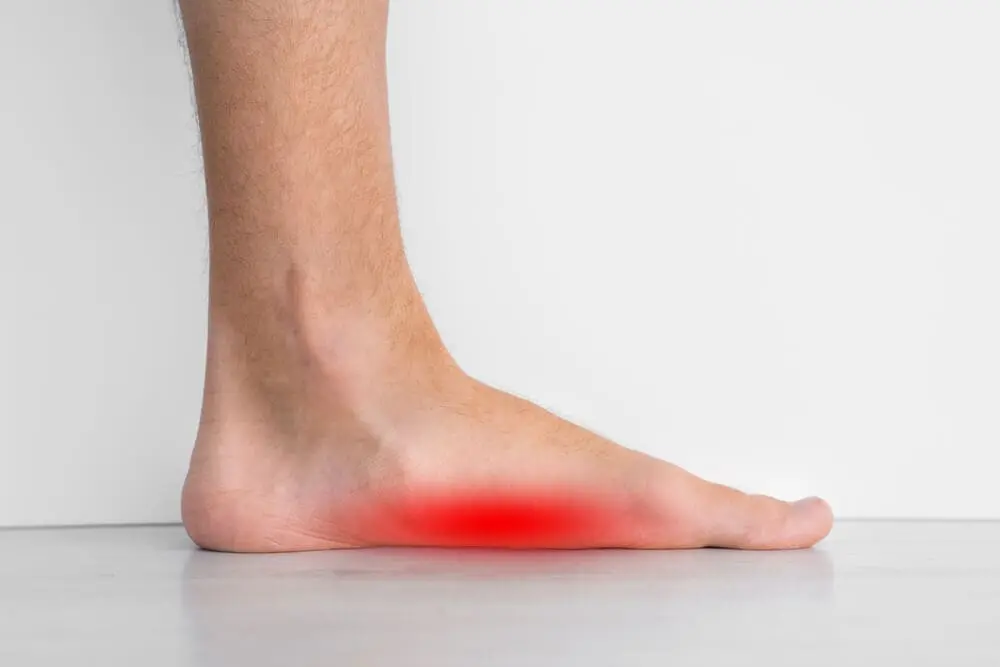
Have you noticed that one of your feet is starting to look flatter than the other? Or that your inner ankle aches more and more by the end of the day? You may be dealing with posterior tibial tendon dysfunction (PTTD) — the most common cause of adult-acquired flatfoot, and one of the most under-recognised problems we treat at our Newcastle clinic.
PTTD is a progressive condition. Caught in the early stages, it responds very well to treatment and surgery can usually be avoided entirely. Left alone, it can progress to a rigid, painful flatfoot deformity that’s much harder to fix.
At East Coast Podiatry Clinic in Kahibah, we assess and treat PTTD for patients across Newcastle and the Lake Macquarie area.
📞 Book an arch and ankle assessment: (02) 4942 2550 · Book online
What is the posterior tibial tendon?
The posterior tibial tendon is one of the most important tendons in your foot. It starts in the calf, runs down the inside of the lower leg, wraps around the inside of the ankle, and attaches to several bones in the midfoot.
Its job is to:
- Hold up the arch of your foot
- Stabilise the foot during walking and running
- Lock the midfoot at the right moment in the gait cycle so you can push off efficiently
When this tendon starts to fail, the arch loses its main supporting structure — and that’s when the foot starts to flatten.
What is PTTD?
Posterior tibial tendon dysfunction (now sometimes called progressive collapsing foot deformity in newer medical literature) describes a progressive failure of this tendon. It typically goes through four stages:
- Stage 1 — Pain along the inside of the ankle. The tendon is irritated but still functioning. Foot shape is unchanged.
- Stage 2 — Pain continues. The tendon weakens, the arch starts to flatten, and you may struggle to do a single-leg heel raise. The deformity is still flexible at this stage.
- Stage 3 — The flatfoot deformity becomes rigid. Pain may move to the outside of the ankle as bones start to impinge.
- Stage 4 — Deformity extends into the ankle joint itself.
The critical line is between stage 2 and stage 3 — once the deformity becomes rigid, conservative treatment becomes much less effective.
What does it feel like?
Early-stage PTTD often gets dismissed as “just a sore ankle.” The classic features include:
- Aching pain on the inner ankle and arch, particularly during or after activity
- Swelling along the path of the tendon, behind the inner ankle bone
- A feeling that the arch is dropping as the day goes on
- Difficulty doing a single-leg heel raise — try lifting onto your toes on the affected foot only. If you can’t, that’s a red flag
- The “too many toes” sign — when viewed from behind, more toes are visible on the outside of the affected foot than the unaffected foot
- Pain that starts on the inside of the ankle and may later shift to the outside as the foot collapses
- A new tendency to roll inwards when walking
If you’ve noticed one foot looking flatter than the other, or one shoe wearing out faster than the other — those are both worth taking seriously.
Who gets PTTD?
PTTD is most commonly seen in:
- Women over 40 — significantly more than men
- People who are overweight or have diabetes — both increase load on the tendon and impair healing
- People with pre-existing flat feet — the tendon has been working harder for years
- Athletes in high-impact sports — basketball, soccer, running, dancing
- People with inflammatory arthritis (rheumatoid, psoriatic)
- People on long-term corticosteroids — can weaken tendon structure
- People who’ve had a previous ankle injury or surgery
A sudden increase in load — a holiday with lots of walking, starting a new exercise program, a big weight gain — can be the trigger that pushes a borderline tendon into dysfunction.
When should you see a podiatrist?
PTTD is one of those conditions where early matters more than almost any other foot problem we treat. Book in if:
- You have inner ankle pain that’s been around for more than 2–3 weeks
- One foot is starting to look flatter than the other
- You can’t do a single-leg heel raise on one side
- Walking long distances is becoming uncomfortable
- Your shoes are wearing out unevenly
- You’ve been told you have “flat feet” and are now getting pain
The reason we push hard on early treatment is that stage 1 and 2 PTTD respond beautifully to conservative care — bracing, orthotics, exercises and footwear changes can often halt progression entirely. Stage 3 and 4 frequently require surgical reconstruction. The earlier we intervene, the more of your foot we can save.
How we treat PTTD
The first visit is about staging the condition, identifying contributing factors (foot type, body weight, calf tightness, activity level), and putting together a plan that’s appropriate for where you are on the spectrum.
First phase — protect the tendon
- Activity modification — reducing high-impact loading while the tendon settles
- Short-term bracing or taping to support the arch
- Ice and short-term anti-inflammatories for symptom relief
- Calf stretching — a tight calf is one of the biggest drivers of tendon overload
Second phase — support and strengthen
- Custom 3D printed orthotics with medial posting and arch support, designed to take load off the tendon and support the arch long-term. This is the single most important intervention for most patients.
- AFO bracing in moderate cases — a custom ankle-foot orthosis can offload the tendon dramatically while it heals
- Targeted strengthening program — the evidence is strong that eccentric calf raises and tibialis posterior strengthening can significantly improve outcomes
- Footwear advice — supportive, stable shoes with a firm heel counter
For advanced cases
- Referral for ultrasound or MRI to assess tendon integrity
- Referral to a sports physician or orthopaedic surgeon if the deformity is rigid or non-responsive to conservative care
- Co-management of any contributing systemic factors (diabetes, inflammatory arthritis, body weight) with your GP
If your biomechanics are part of the problem — and they almost always are with PTTD — addressing the foot type and gait pattern is central to preventing progression.
Why proper rehab matters
PTTD is unusual in that rest alone often makes it worse, not better. The tendon needs the right kind of loading — controlled, progressive, strengthening — to remodel and recover. Just stopping activity often leads to further weakness and a faster collapse.
Equally, just adding an orthotic without addressing the calf, the strengthening program, or the underlying load tolerance gives partial results at best. The patients who do best are the ones who treat PTTD as the multi-pronged problem it is.
Preventing progression
If you’ve had PTTD diagnosed early, you can significantly reduce the risk of progression by:
- Wearing your orthotics consistently, especially during exercise and long days on your feet
- Keeping up with calf and posterior tibial strengthening — long term, not just until the pain settles
- Managing body weight where this is a factor
- Choosing supportive footwear and avoiding flat, unsupportive shoes (thongs, ballet flats) for long periods
- Treating any flare-ups early rather than working through them
- Annual review so we can track any subtle changes in foot shape
Book an arch and ankle assessment in Newcastle
If you’ve got inner ankle pain that won’t settle, or you’ve noticed your foot is starting to flatten — the earlier we look at it, the more options you have.
📍 East Coast Podiatry Clinic, 2/1 Glebe St, Kahibah · 📞 (02) 4942 2550 · 🩺 Book online
Frequently asked questions
Can PTTD be reversed? In stages 1 and 2 (flexible deformity), yes — conservative treatment can stop progression and often improve foot shape. In stages 3 and 4 (rigid), the deformity itself can’t be reversed without surgery, but symptoms can still be managed.
Will I need surgery? Most patients we see in stages 1 and 2 don’t need surgery if they get treatment early and follow through with it. Surgery becomes more likely when the condition has been left to progress.
How long does conservative treatment take? Expect 3–6 months for meaningful improvement, and ongoing maintenance (orthotics, strengthening, footwear) long-term to prevent recurrence.
Can I still run with PTTD? Often yes in stage 1, with the right orthotics, footwear and load management. Stage 2 and beyond usually requires a more significant reduction in high-impact activity.
Is PTTD the same as flat feet? No. Flat feet are a foot shape — many people have them and never develop pain. PTTD is a progressive failure of a specific tendon that causes an adult-acquired flatfoot. The distinction matters because PTTD needs active treatment.
Do I need a referral? No — you can book directly. We can co-manage with your GP, sports physician or orthopaedic specialist if needed.
Medically reviewed by Tim Foran, Podiatrist (AHPRA registered). Last updated: May 2026.